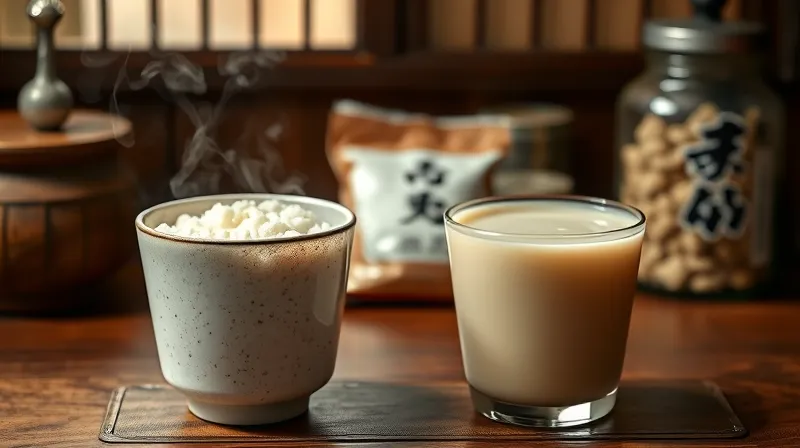
You are standing at a snowy shrine in Japan on New Year’s Eve, shivering in the cold. A vendor hands you a steaming white cup of Amazake. It smells sweet, comforting, and faintly like… sake?
You pause. “Wait, is this alcohol? Can I drive after this? Can my kids drink it?”
It is a common moment of confusion for travelers. The name literally translates to “Sweet Sake” (Ama-zake), yet you will often see it sold in vending machines alongside green tea. So, what is the truth?
The answer lies in the ingredients. There are actually two completely different drinks that go by the same name. One is a nutritional powerhouse safe for babies; the other might turn your face red.
Quick answer
It depends on how it is made.
- Rice Koji Amazake: 0.00% Alcohol. Made from rice and mold culture. Safe for children, pregnant women, and drivers. It is naturally sweet without added sugar.
- Sake Kasu Amazake: Contains Alcohol (usually <1% but can be higher). Made from sake lees (the byproduct of sake production). It requires added sugar and has a distinct sake aroma. Avoid driving after drinking this type.
What is Amazake?
Amazake (甘酒) is a traditional Japanese fermented rice drink. It has a creamy, porridge-like consistency and is served hot in winter or chilled in summer.
- Pronunciation: [ah-mah-zah-keh] (Avoid saying “sake” like the English word “sake”—the ‘e’ is short like in “get”.)
While it is often called a “drink,” the texture can be thick enough that you might feel like you are eating it rather than drinking it. It has been consumed in Japan for over a thousand years, originally as a way to preserve food and boost energy.
The Two Types: How to Spot the Difference
If you are in a Japanese supermarket or convenience store, you need to know which one you are buying. Here is the breakdown.
1. Rice Koji Amazake (Non-Alcoholic)
- Japanese: 米麹 (Kome Koji)
- Taste: Naturally sweet, mild, slightly grainy texture.
- Alcohol: 0.00%.
- Why drink it? Often called the “drinking IV” (Nomu Tenteki) because it is packed with glucose, B vitamins, and enzymes. It is a superfood used for beauty and fatigue recovery.
- Key Kanji on label: Look for 米麹 (Rice Koji) or アルコール0% (Alcohol 0%).
The Art of Koji: Unlocking the Secrets of Japan’s Fermented Delicacies
2. Sake Kasu Amazake (Alcoholic)
- Japanese: 酒粕 (Sake Kasu)
- Taste: Deep, aromatic, less sweet (needs sugar added), hints of alcohol.
- Alcohol: Usually trace amounts, but depends on preparation.
- Why drink it? It is deeply warming and comforting in winter. The Sake Kasu (lees) is rich in fiber and protein.
- Key Kanji on label: Look for 酒粕 (Sake Kasu) or a warning about alcohol.
Is it safe to drive after drinking Amazake?
This is the most critical question for travelers renting cars.
The Legal “1% Rule”
In Japan, a beverage is legally considered “alcohol” only if it contains 1% or more alcohol.
Many canned Sake Kasu Amazake drinks sold in vending machines contain less than 1% alcohol (often around 0.8% or 0.9%). Legally, these are “soft drinks.”
However…
We strongly recommend you DO NOT drive after drinking Sake Kasu Amazake.
Even if it is legally a soft drink, 0.9% alcohol is not 0.0%.
- Breathalyzers: Japan has very strict drunk driving laws. Even a faint trace of alcohol on your breath can cause trouble.
- Low Tolerance: If you are sensitive to alcohol, one cup can make you feel flushed or drowsy.
- Homemade Danger: If you buy it at a shrine festival or a tea house, it might be homemade. Homemade versions often have higher alcohol content because the chef might not have boiled it long enough to evaporate the spirits.
For safety, stick to the Rice Koji type if you are the designated driver.
Exploring Low-Alcohol Beverages: How They Differ from Non-Alcoholic Drinks
Cultural context
Why do Japanese people love this cloudy, sweet drink?
The Winter Ritual
On New Year’s Eve and the first days of January (Hatsumode), shrines across Japan serve hot Amazake to worshippers. It is the Japanese equivalent of hot chocolate or mulled wine—a way to warm the body and soul while waiting in long lines to pray.
Nyumen: Japan’s Soul-Warming Winter Noodle Dish
Hina Matsuri (Doll Festival)
On March 3rd, it is traditional to drink Shirozake (a potent white sake). However, because this festival celebrates young girls, Amazake (the non-alcoholic Koji version) acts as the kid-friendly substitute so everyone can toast together.
Practical guide for travelers
How to drink it
- At a Shrine: It is usually served in a small paper cup. Sip it slowly; it retains heat well.
- In a Can: Shake well before opening! The rice sediments settle at the bottom.
- Cooking at Home: If you buy a block of Sake Kasu (sake lees) to make it yourself at an Airbnb:
- Dissolve the paste in boiling water.
- Add plenty of sugar (it is bitter without it).
- Boil it: To lower the alcohol, you must let it boil (uncovered) for at least 5 minutes. Note: This reduces but does not completely eliminate alcohol.
Storage rules (If you buy fresh Amazake)
Unlike the canned versions, fresh Amazake (especially homemade) is “alive.”
- Fridge is a must: Bacteria love the sugar in Amazake. Keep it below 10°C (50°F).
- Expiration: Drink fresh Amazake within 2-3 days.
- Leftover Sake Kasu: If you bought a pack of sake lees, freeze it. It lasts for a month in the freezer.
Common misconceptions
- “Amazake is always healthy.”
- Reality: While nutritious, the Sake Kasu version often has a lot of added sugar to mask the bitterness. The Rice Koji version is naturally sweet, but still high in carbohydrates.
- “Boiling removes all alcohol instantly.”
- Reality: It takes time. Simply bringing it to a boil does not make it 0.00%. If you are strict about alcohol (e.g., for religious or medical reasons), avoid the Sake Kasu type entirely.
Next step
Next time you are in a Japanese convenience store (Konbini), look at the hot drink section.
- Find a small jar or can with the characters 米麹 (Rice Koji).
- Try it as a morning energy booster before a day of walking.
- If you are adventurous and not driving, try the 酒粕 (Sake Kasu) version to experience the deep, adult flavor of winter Japan.